Little Corners of America in London.Every year, over three million Americans hop across the pond to explore London. That makes the USA our biggest group of overseas visitors. So I thought it was about time I tipped my hat to our most loyal guests and dedicated a blog just for you fine folks. If you happen to be in London over Thanksgiving, we might struggle to furnish you with pumpkin pie or a turkey the size of a small car, but you’ll be happy to learn that London has plenty of little corners that will chase away any homesick blues. Step onto American soil If you visit the National Gallery, keep an eye out for a bronze statue of George Washington standing proudly on the grass outside. It was a gift from the people of Virginia back in the 1920’s. Rumour has it that after the Revolutionary War, Washington vowed never to set foot on British soil again – so to honour this promise, the statue stands on a pile of American soil shipped over from Virginia. Visit the home of Benjamin Franklin Sticking with the Founding Fathers theme, just a short stroll from Trafalgar Square you’ll find Benjamin Franklin House - the world’s only surviving home of the great man himself. In 1757, the soon-to-be Founding Father arrived in London as a representative of the Assembly of Pennsylvania and rented rooms at 36 Craven Street. It was effectively an eighteenth century Air BnB – except Franklin stayed for 16 years. If you pay the museum a visit you’ll step back in time and learn how this Pennsylvania envoy became a London local. Sip a cocktail in the longest surviving American bar in town The Stafford Hotel claims to be one of the finest luxury hotels in Mayfair, one of London’s most prestigious neighbourhoods. It offers a quintessentially British experience, so you might be surprised to learn that it’s got an American connection. During WWII, the American military were based nearby and The Stafford became their informal club. Today the USA connection lingers in the form of the American Bar – one of the longest surviving American bars in London. Its dress code is quite smart though – so no sneakers allowed! If you do visit, raise a glass to Nancy Wake. She was an intelligence agent and the most highly decorated British servicewoman during World War II. She was also the Gestapo's most-wanted person - codenamed 'The White Mouse'. She lived her final years at The Stafford and could often be found in the hotel's American Bar, enjoying a gin and tonic. The hotel created a special cocktail, "The White Mouse," in her honour. A little bit of Texas in St James’s Keeping with the booze theme – or “liquor”, as you Yanks like to say – if you wander over to Berry Bros & Rudd, one of London's oldest wine merchants, you’ll see a plaque dedicated to the Republic of Texas. Back in 1836, when Texas briefly declared itself a republic, it set up a legation (not quite an embassy) here. Between 1842 and 1845, a few rooms at Berry Bros. doubled as the Texan outpost - so for three years, a part of a London wine shop was technically a bit of Texas. The wine shop has 2.5 acres of wine cellars underneath St James’s Street and I’ve been lucky enough to be given a tour of the shop and its cellars by one of the Berry family. The shop features a number of times in my Fun London Fact’s book “Why is Downing Street Painted Black? – and 364 Other Fun London Facts” and a whole chapter dedicated to American connections in London. (Blatant plug over) So, if you’re planning on crossing the pond for a London adventure and fancy joining one of my weekend walks (note, they’re not every weekend!) or want to book a private tour – I’d love to show you round our wonderful capital city!
0 Comments
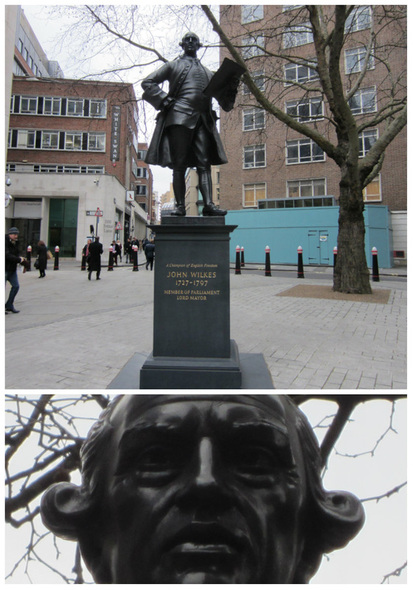
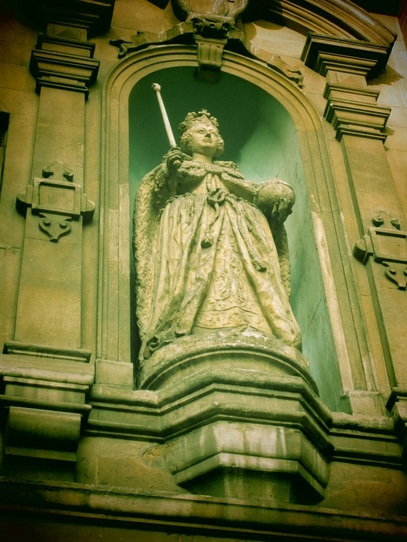
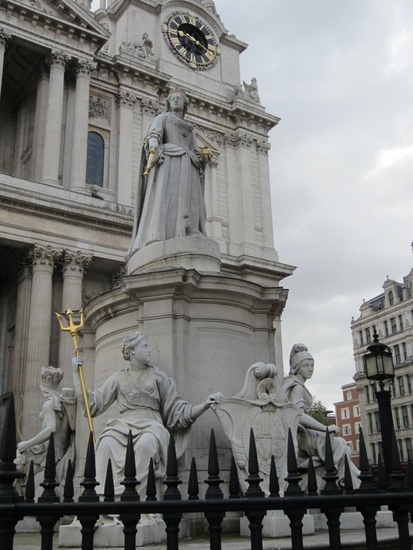
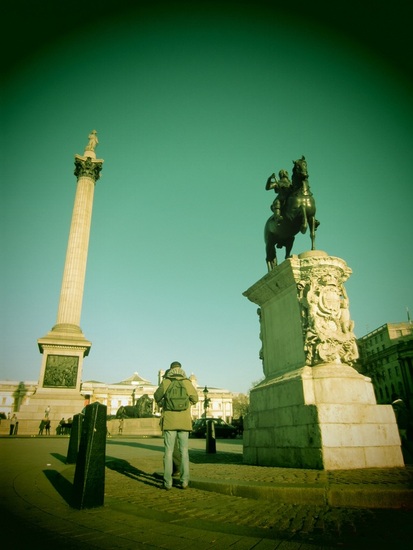
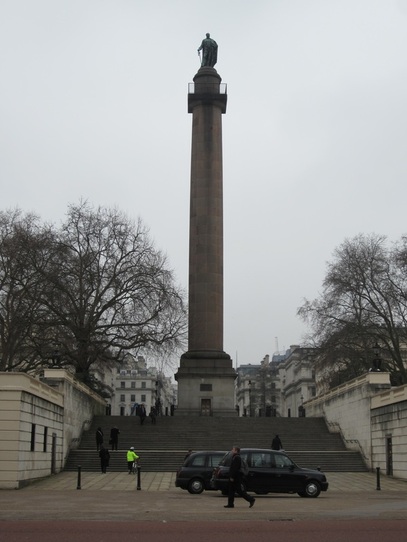
Each Friday, or at least, most Fridays, I do a Friday quiz over on the Bowl Of Chalk Facebook Page. Last Friday's question related to the statue below, of John Wilkes, which would appear to be the only statue in London that has a squint, because not surprisingly, John Wilkes did have a prominent squint. It got me thinking, that I've discovered that many of London's statues which people wander past every day have interesting, strange or mildly absurd stories attached to them, so thought I'd share a few of my favourites with you here ... in no particular order. Elizabeth I This statue of Elizabeth I nestles up in the church of St Dunstan-in-the-West on Fleet Street, and made in 1586 during the Queen's own life time, originally stood on the old Ludgate, but was saved during the Fire of London, and later placed in its current position. (It's currently hiding beneath scaffolding, and won't be seen again until the autumn). The statue however, in 1929 received its own income, when Dame Millicent Fawcett, an English Suffragist and early feminist left £700 to the statue in her will. George Washington It is said that when this statue of George Washington (which stands to the north of Trafalgar Square, outside the National Gallery) was given to us as a gift in the 1920's by the people of Virginia, they sent with it, a load of American soil to be placed underneath, as Washington had stated that he never wanted to set foot in England. Queen Anne This statue of Queen Anne stands very prominently outside the main entrance to St Paul's cathedral. It's not the original, made in the 1700's by Francis Bird, but a Victorian copy made by sculptor Richard Claude Belt. According to author Tom Quinn, Belt was forced to make the statue from prison after he was imprisoned for fraud having already been commissioned to make the statue. It could be entirely possible as Belt did spend 12 months behind bars at about the same time. Charles I This statue of Charles I just south of Trafalgar Square is the oldest bronze equestrian statue in Britain, made during Charles' life time. After the unfortunate Monarch had his head chopped off in 1649, a metalsmith called John Rivet was ordered to melt down the statue and turn it in to trinkets, which people could buy as macabre souvenirs of the execution. However, Mr Rivet evidently melted down something else, realising perhaps that fortunes might change, and kept the statue hidden until Charles II was restored to the throne in 1660 and bought it back. Incidentally, you can see Nelson's Column in the background, which comes furnished with its own fascinating stories. Prince Frederick, Duke of York
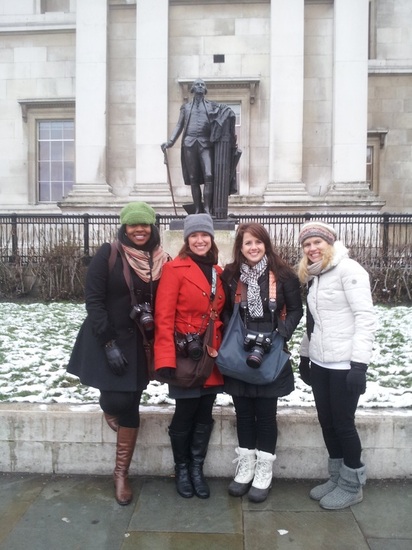
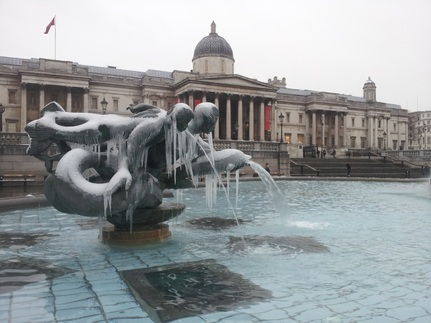
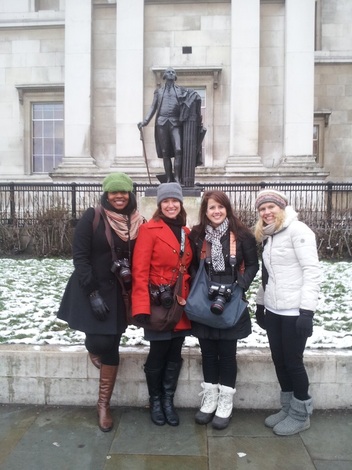
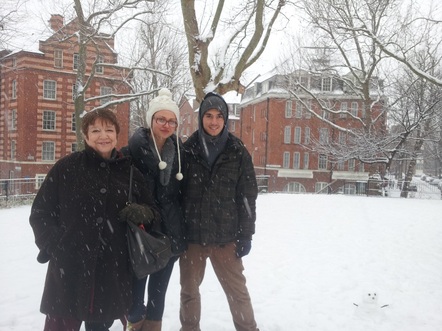
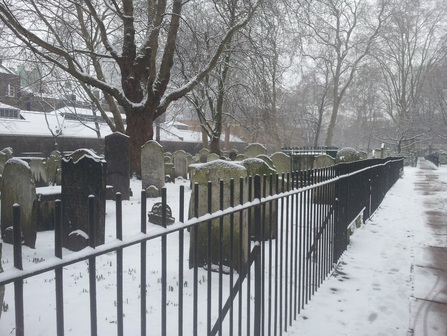
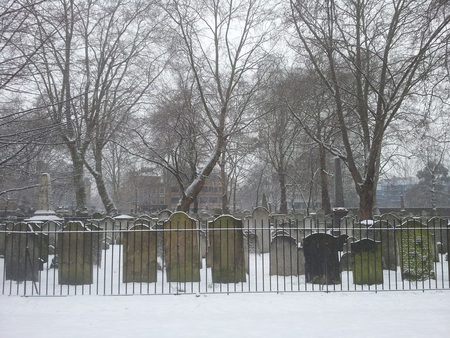
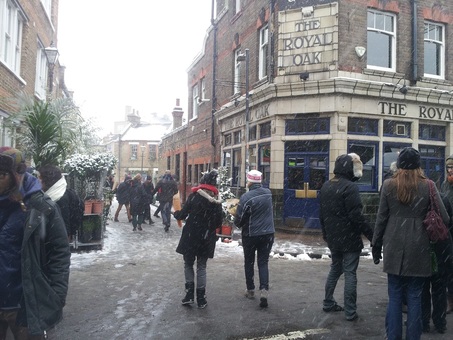
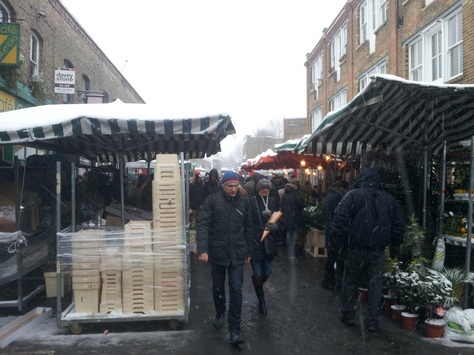
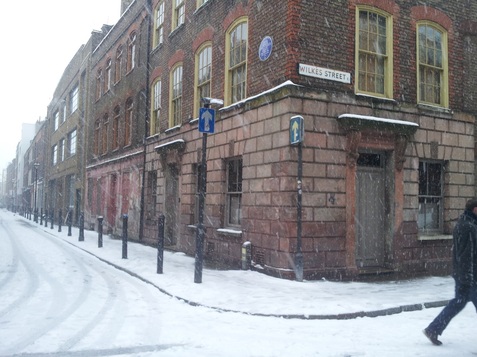
This 137 ft statue overlooks St James's Park and the Mall. Frederick was the second eldest son of King George III and when he died, every member of entire British army forewent a days pay to help raise the funds for the statue. Depending on which sources you read, they either did this gladly, or were forced to, as no one was willing to fork out the £21,000 needed to build it. Either way, when it was eventually finished in 1834 it was joked that the statue was so high up, so the Duke could escape his creditors. He died, £2 million in debt. I was incredibly impressed that people actually bothered or were able to turn up this weekend, what with all the snow and general coldness. Top marks for effort everyone. On Saturday morning, I met Mackenzie, Wendy, Erica and April for the walk from Trafalgar Square to St Paul's. Just to give you an idea of the temperature, or lack of it, the fountains in Trafalgar Square looked like this: Here are the group, standing in front of the statue of George Washington, which is situated outside the National Gallery (the building you can see above). Seeing as they were a group of American's, and George Washington was the first President of the United States, it seemed an appropriate place to take the photo. There's a nice little story about that statue, which is that Washington apparently said that he never wanted to set foot in London again, so when the statue was given as a gift in 1921 by the people of Virginia, they sent over a load of American soil with it to be laid underneath, so that he never would. A bit cheeky perhaps. On Sunday it snowed non stop for the entire My neck of the Woods walk, but Zuzana, Guglielmo and Mary still valiantly turned up to wander around the east end, Mary (from the USA) incidentally, was on her second Bowl Of Chalk, after coming on one last year. It was my first ever walk in the snow, so was interesting to see how everything looked under a blanket of white. Here they are at Arnold Circus, the first council estate in England, completed in 1896 and featured not long ago, in a BBC2 series called The Secret History of Our Streets. Here are a few other snowy scenes we saw along the way. Not surprisingly, Columbia Road Flower Market was pretty sparse but it at least meant that Mary and the other two were able to have a good look around the many independent shops that line the road and are pretty much only open on Sundays. Incidentally, the pub you can see there in the photo, The Royal Oak has featured in a few TV shows and films, including 'Goodnight Sweetheart' (with Nicholas Lyndhurst, best know for playing Rodney Trotter in 'Only Fools and Horses') and Guy Ritchie's 'Lock Stock and Two Smoking Barrels'. Many of the houses in the area of Spitalfields where I took the above photo were built in the early 1700's to house the influx of French Huguenots who had settled in the area in the 17th Century. Also, whilst I'm thinking about it, there's a great blog called 'Spitalfields Life' written by The Gentle Author who has set himself (or herself?) the challenge of writing 10,000 stories about the area, the fascinating characters that live there, shops, customs, history and much more. The project should be completed in the year 2037, but one volume has already been published as a book. It's well worth having a read if you are of even a mildly curious disposition.
Some Awards Most Italian - Guglielmo Most likely to be celebrating her 40th birthday - Wendy Best moustache - No winners Best named person to meet in Old Street - Mary Young Most bobbly hat - Zuzana |
Bowl Of ChalkBowl Of Chalk based shenanigans. Archives
January 2026
Categories
All
|
RSS Feed