|
STRAIGHT TO CURISTORIAN CLUB TICKETS I’ve thought for a long time it’d be nice to organise some events related to London history and culture and invite different speakers to share their specialist London knowledge . Well, I’ve got my arse in to gear and am delighted to announce the first three Curistorian Club events kicking off later this month. Each event will take place in the evening on the last Tuesday of the month in a room above The Devereux, a lovely pub nestled off Fleet Street, next to one of the Inns of Court. Every Curistorian Club night will be hosted by me and involve two guests either presenting their specialist subject or doing a Q and A with me. One guest will have a historical angle and the other a more cultural emphasis and all of them will be London experts of some sort. I’ve booked in the guests for January, February and March and they include: a Thames Mudlark, a crime writer, two artists, a nature writer / London tree expert. Tickets are £15 per person and available through Eventbrite, with only 30 or so tickets available for each night. Here’s the full line up: Tuesday 27th Jan (7pm – 11pm) Curistorian Club #1 Ben Wilson & Monika Buttling-Smith (chewing gum art and a Thames river finds) Ben Wilson Better known as ‘the Chewing Gum Man’, Ben Wilson has spent over two decades painting amazing miniature pictures on to discarded pieces of chewing gum so it’s entirely possible you’ve already come across him. For the last 10 years or so he’s been an almost permanent fixture on the Millennium Bridge, but you can find his tiny bits of masticated art all over the city’s streets …and elsewhere in the UK and beyond. I’ll be chatting to him about his life, his art, how he came to be ‘the Chewing Gum Man’ and encouraging him to share with us some of his adventures along the way. Monika Buttling-Smith Monika Buttling-Smith co-founded and runs the popular Hands on History Mudlarking Exhibitions, which pop-up all over London. She is a member of the exclusive Society of Thames Mudlarks and a major contributor to the London Museum's Secrets of The Thames Exhibition (ends 1st March). Monika and her museum-worthy treasures have been regularly filmed and published, and she’s ditching her muddy boots and knee pads to share with us some of her most special finds, including a rare medieval Pax, a religious artefact so demonised by Henry VIII and Edward VI that owning one could lead to your death! Tuesday 24th February (7pm – 11pm) Curistorian Club #2 Paul Wood & Nadine Matheson (London tree hunting and not so cosy crime) Paul Wood Paul Wood is a London-based writer, blogger and photographer who bloomin’ loves trees. His book London’s Street Trees was the first book dedicated to the city's frontline trees, is now in its third edition and has not been out of print since it was first published nine years ago. He has written three other books about trees and urban nature: Tree Hunting: 1,000 Trees to Find in Britain and Ireland’s Towns and Cities (Particular Books 2025), London is a Forest (Quadrille 2019, 2022) and London Tree Walks (Safe Haven 2020), he is also the editor of the Great Trees of London Map (Blue Crow Media 2021). I’m looking forward to learning more about London as an urban forest and hopefully becoming more aware of the nature that surrounds us …even in London. Nadine Matheson Nadine Matheson is a born and bred Deptfordonian (if that’s a word) criminal defence lawyer who somehow finds time to write amazingly brilliant crime novels set in and around south east London. Her first crime novel, The Jigsaw Man was shortlisted for the Dead Good Reader and the Adult Diverse Book Awards in 2022, and has been translated into fifteen languages. Her latest book The Kill List was longlisted for the Theakston Crime Novel of the Year in 2025. Nadine is currently the chair of the Crime Writers’ Association, and host of the podcast, The Conversation with Nadine Matheson. As it happens, her fifth novel The Shadow Carver is being published in February, so I’m hoping she’ll tell us all about that, her career thus far and reveal more about her ties to Deptford and its inspiration in her novels. Tuesday 24th March (7pm – 11pm) Curistorian Club #3 Ed Gray & Jonnie Fielding (Painting London and fun London facts) Ed Gray For the last thirty years, Ed Gray has dedicated his life to painting London in all its grime and glory, capturing from real life Hogarthian scenes of the modern metropolis. Through attentive observation, Gray records everyday individuals in his sketchbooks, later translating these studies into multi-layered compositions that resonate with allegory and symbolism. Many of his paintings are massive, crammed with real life characters, reflecting back the ever changing cityscape and those who inhabit it. His paintings were once described as “an ongoing transmetropolitan tapestry”. He’s going to join me for a special Q and A to get under the skin of his work and to share with us his fascination for London and his ceaseless desire to commit it to canvas. Jonnie Fielding Jonnie Fielding …is me. I’ve been a tour guide in London for 16 or so years and have run Bowl of Chalk for 14. It’s been an amazingly tumultuous journey, but one which I continue to enjoy immensely through my regular walking tours and online videos. Last year I was lucky enough to have a book published, ‘Why is Downing Street Painted Black? (and 364 other fun London facts). I’ll be talking in more depth about some of the fun London facts I’ve discovered and answering any questions you might have about London and / or stories from my years guiding in London. In a nutshell
Bowl of Chalk’s Curistorian Club is an informal way to meet like-minded people in the cosy setting of an historic London pub and learn from experts about London, its history and how it continues to inspire writers, musicians and of course the incurably curious. I hope you’ll be able to join us for one of the events. I will be hosting more monthly events to be announced soon, so keep an eye on my website, Instagram and other channels for updates. Tickets for all three Curistorian Events are available HERE.
0 Comments
Step into the (Muddy) Shoes of a Mudlark.You probably already know that the 95-mile stretch of the Thames from Teddington to Southend is tidal. But did you know that twice a day, when the sea water dramatically retreats, the river can drop by up to seven metres (23 ft)? And did you know there’s a whole band of people whose happy hobby is to scour the exposed riverbed in search of fragments from London’s past? These fascinating folk are called ‘mudlarks’ and some of the remarkable treasures they’ve uncovered over the years are now on display at the 'Secrets of the Thames’ exhibition at the London Museum Docklands, running until 1st March 2026. I’d genuinely recommend a visit. I’ve had a soft spot for the Thames and its mudlarks ever since I met my first one, Nicola White, back in 2015. That was shortly before I walked the entire length of the river, from the North Sea to the Source. Another adventure I’d recommend, if your knees are up to it. I’ve been itching to see the exhibition since it opened, and I wasn’t disappointed when I finally popped in last week. It’s an absolute treasure of an exhibition - pun fully intended. And if you’re quick and you time your visit right, you’ll even get to meet a mudlark or two in person. They’re in attendance on Tuesdays and Sundays until 21st December. When I was there, Sean Clarke (a mudlark) who came on a walk with me a few months ago, was at the exhibition showing people his collection of finds, which included Roman dice and also 17th century trade tokens. Mudlarking: London’s peculiar but popular pastime. Historically, 'mudlarks' referred to some of the poorest Londoners, sadly, often children, who searched the Thames riverbeds for anything they could sell to survive. Today’s mudlarks have uncovered all sorts of extraordinary finds from Bronze Age swords, Roman jewellery, Tudor clothing accessories, and even neolithic human skeletal remains. Doesn’t it make you want to don your marigolds and get down there? If so, you’ll need a permit, and there are currently 10,000 people on the waiting list. Turns out it’s not just me that’s got a burning ambition to roll my sleeves up and rummage for relics. London’s liquid history London owes its very existence to the Thames - from the Romans settling here 2,000 years ago, to the reason medieval London prospered. In the early 20th century, politician John Burns called it London’s ‘liquid history’ – a term I’d love to have coined myself, but sadly can’t take any credit for. I’ve devoted a whole chapter to London’s rivers in my book, ‘Why is Downing Street Painted Black? And 364 Other Fun London Facts’, but you should definitely visit the exhibition and step into the shoes of a mudlark, uncovering the artefacts and secrets of London and all its people – past and present. Check out this link to discover some of the highlights from the exhibition.
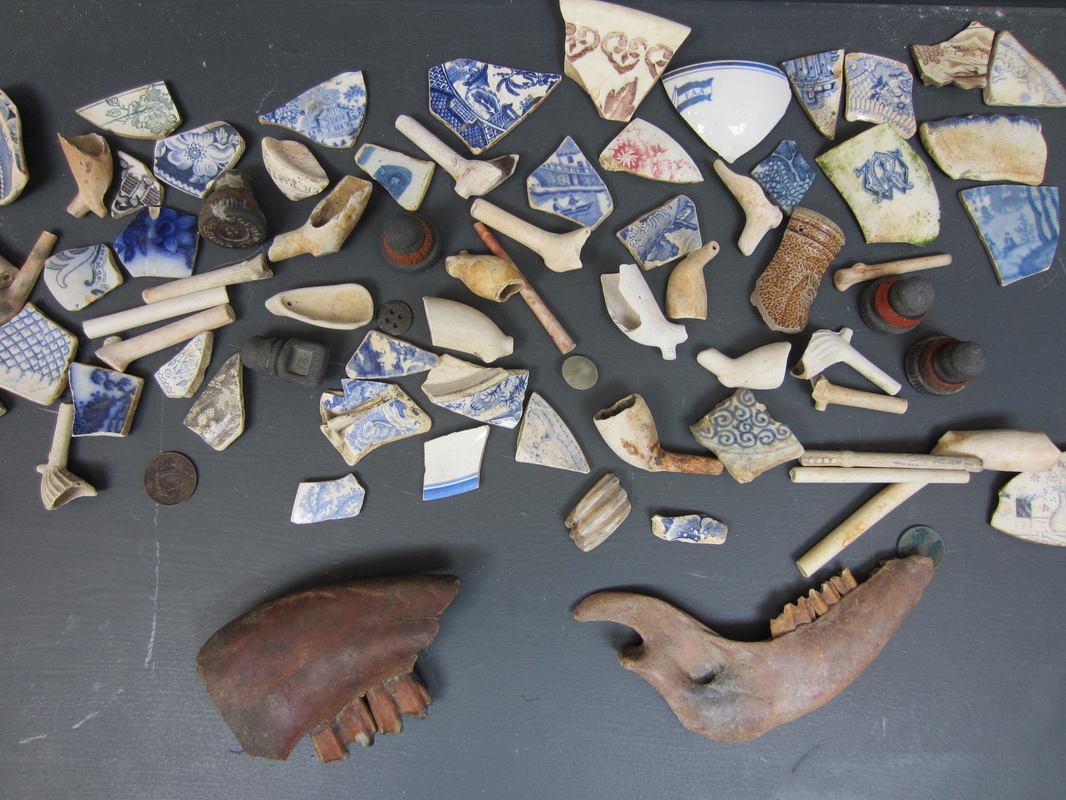
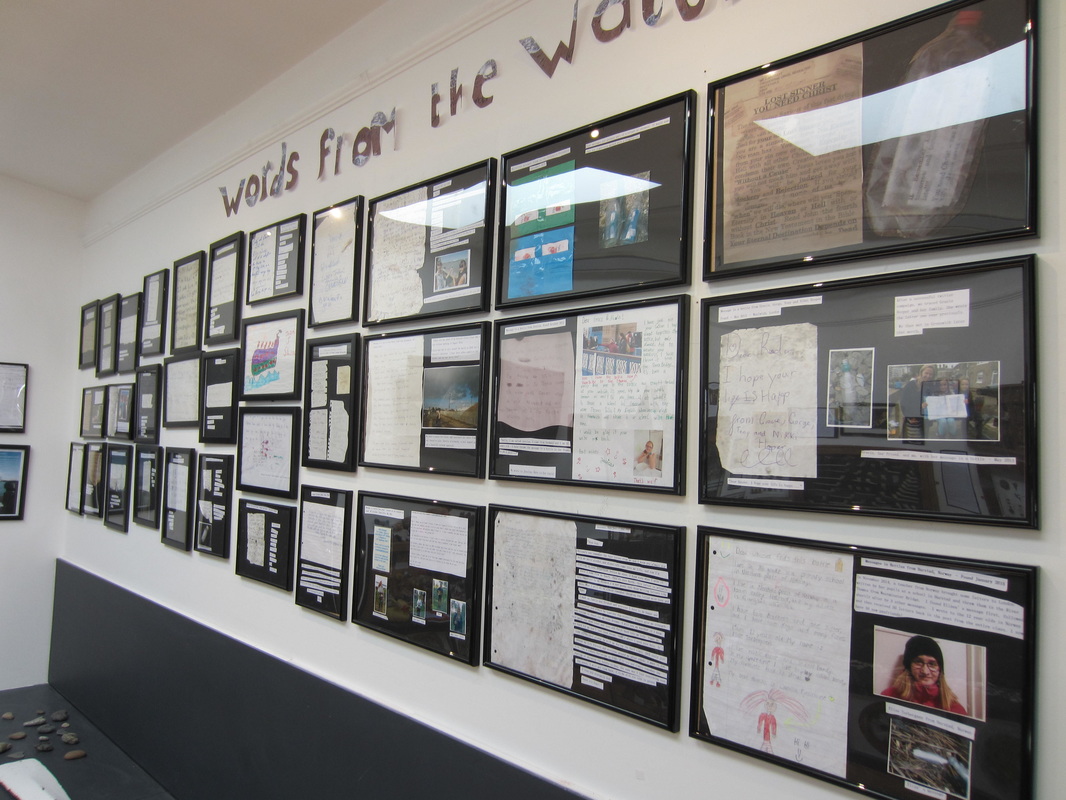
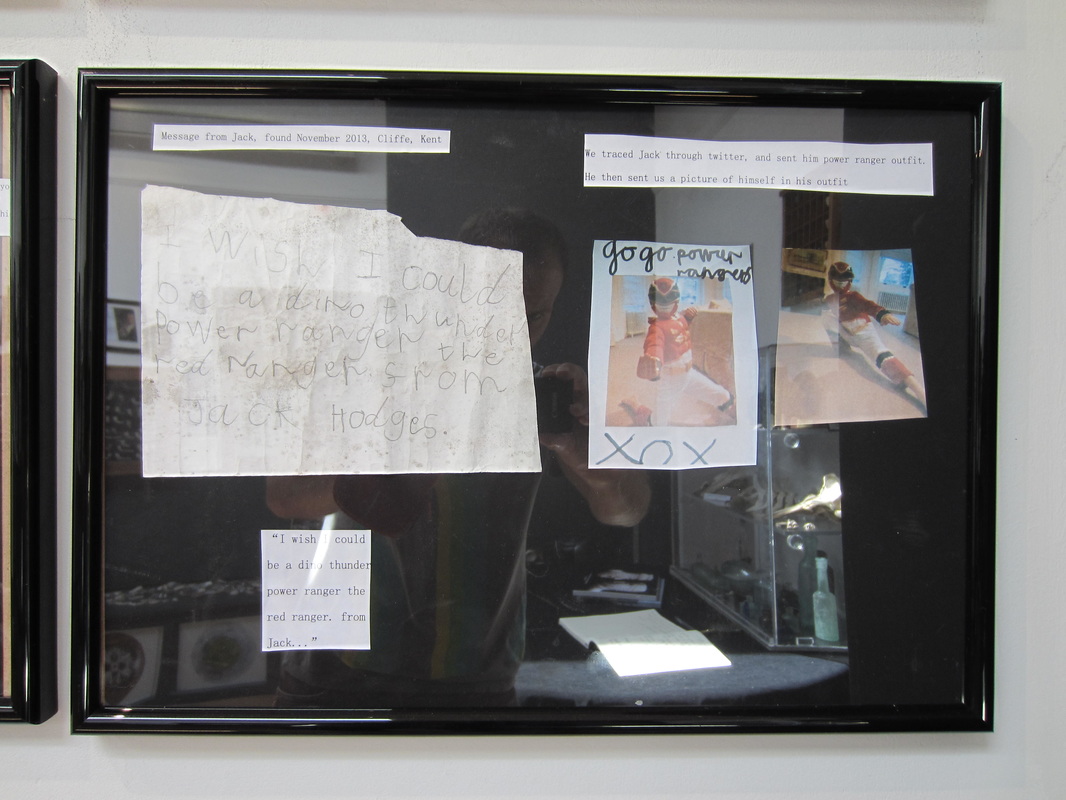
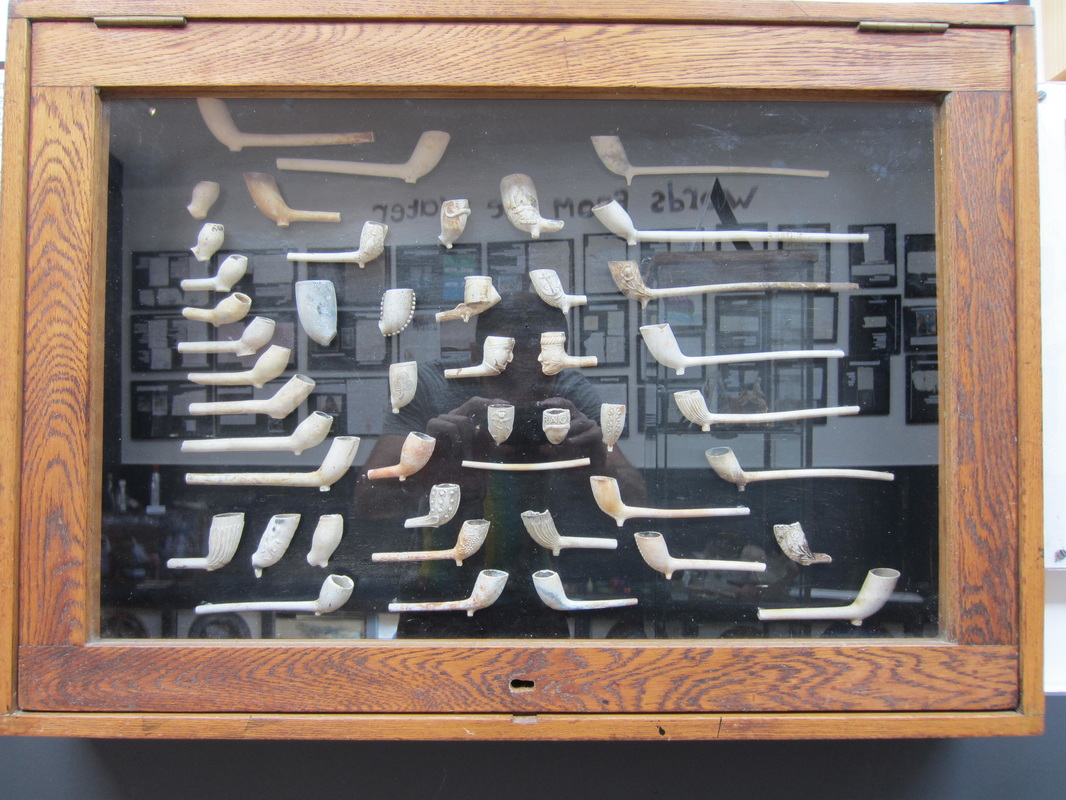
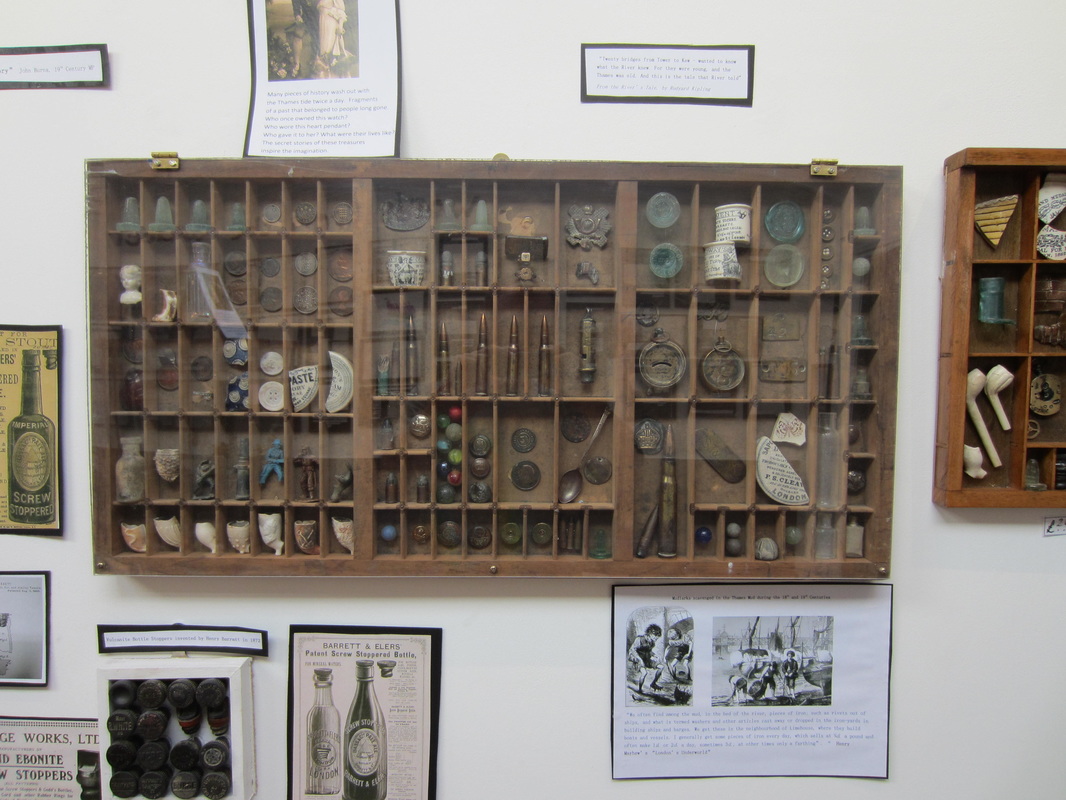
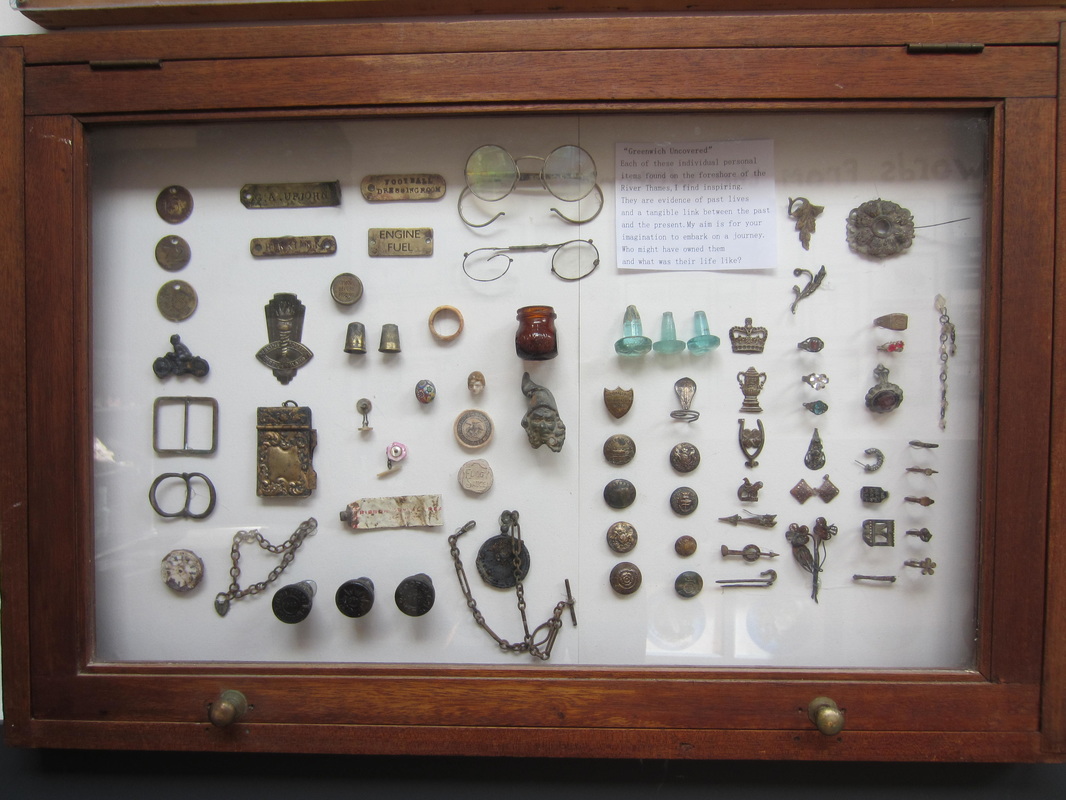
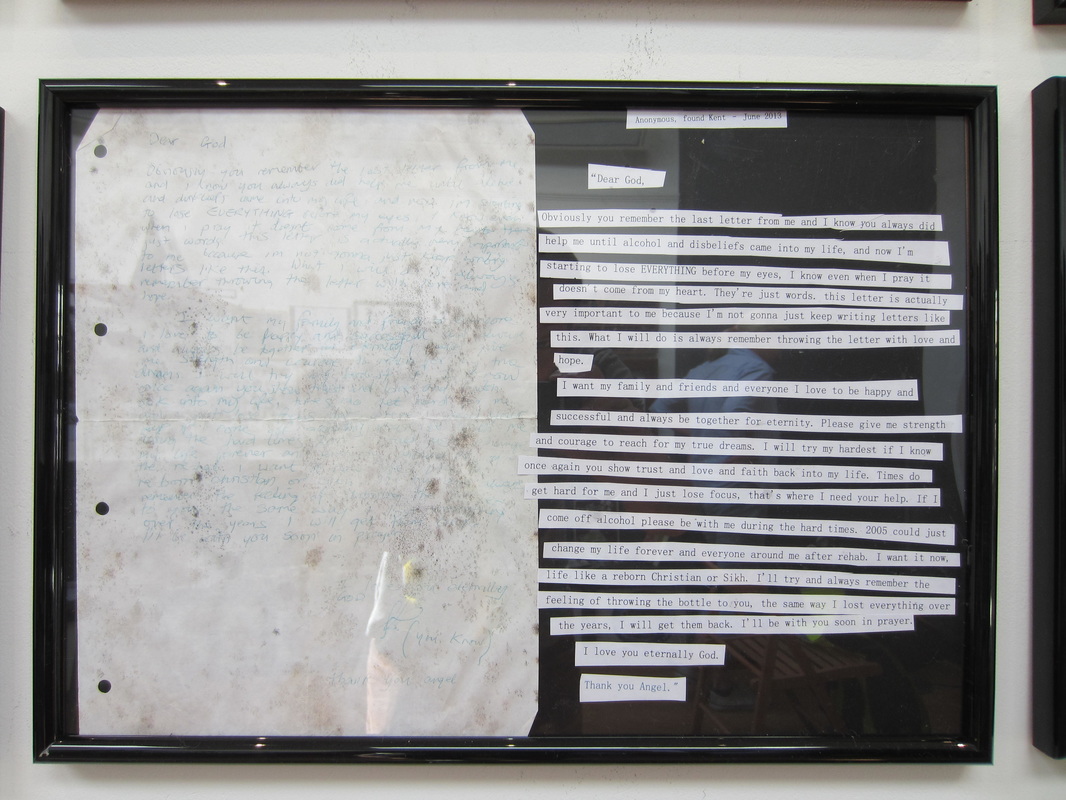
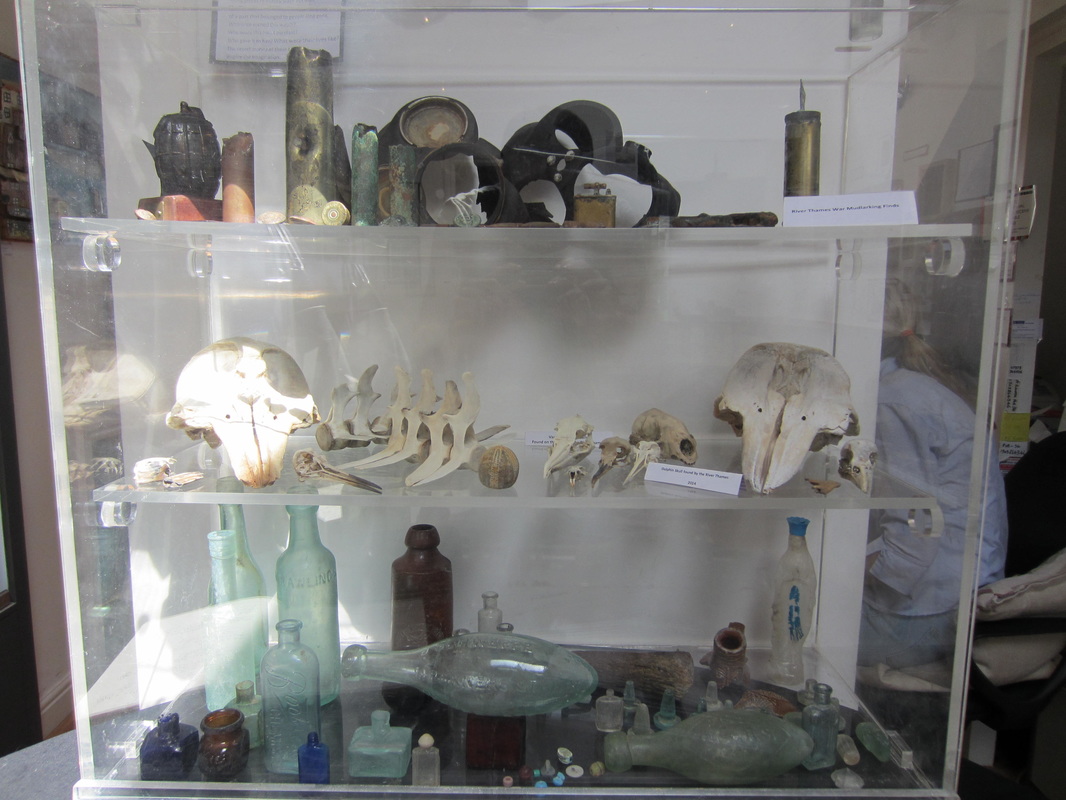
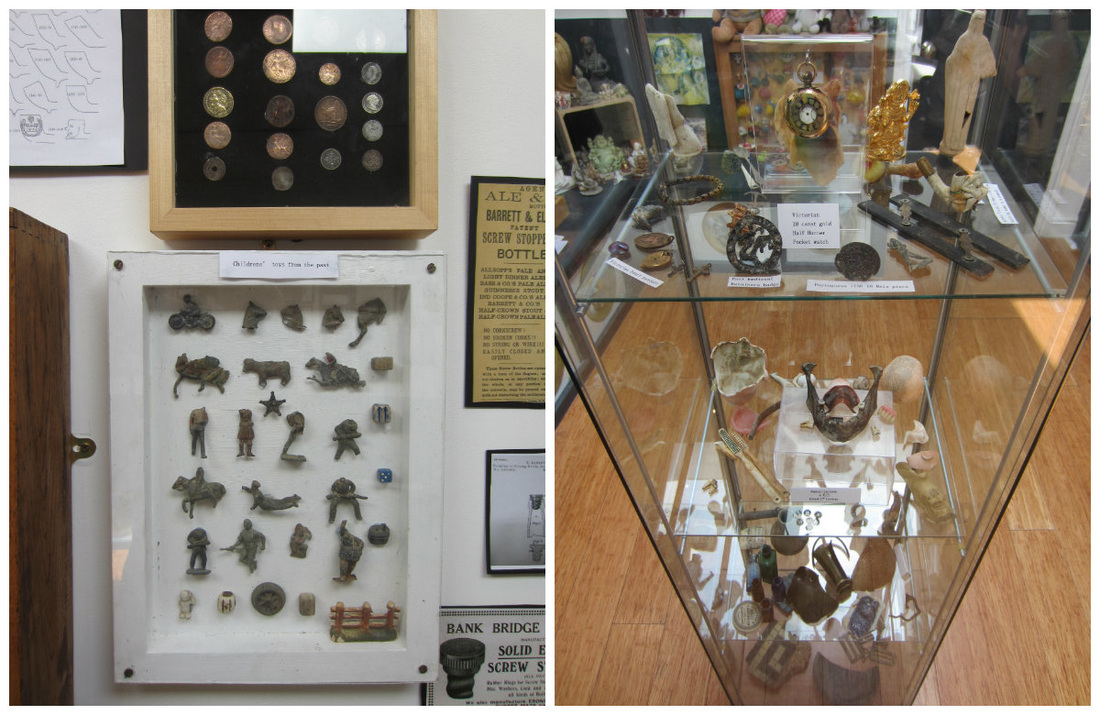
If you visit the exhibition, then I’d love to hear what you thought of it! At the end of this week I will be embarking on the final stretch of a Thames Walk. I have already walked from the sea to Putney, and on Friday I will walk from Putney to the source in the Cotswolds, a distance of about 170 or so miles. This particular endeavour has come about from a mildly obsessive, geeky interest in the River Thames, a river, which was called “liquid history” by the 19th / 20th century politician John Burns. His wonderfully astute turn of phrase effortlessly captures the tidal nature of the dark river and the simple fact that each and every day, with the changing tides, its waters offer up gifts from the past. Like a cat bringing in from the garden, a dead mouse or a frog for the pleasure (or displeasure) of its owners, the River Thames, leaves strewn about its banks and beaches, glimpses of our own history for us to find, or not, as the case may be. It was through my own interest in this remarkable open archaeological site that curls like a giant ribbon through London that I came across a lady called Nicola White, a mudlark (amongst other things) who enjoys nothing more than walking her dog through the quieter reaches of the Thames estuary and picking up these treasures as she goes. Some of her finds she turns in to pieces of art, others items she keeps and in 2011 she found a message in a bottle, which for her marked the beginning of a new journey. Since that first message, Nicola, has over the last few years, found over 30 messages and it was these I found particularly interesting. Some are from children just intrigued to see if anyone finds their message, some are cries for help, or desperation with the world. Others are from lovers declaring their undying love for each other, whilst many are quite enigmatic or simply pearls of wisdom the writers wished to share. Nicola has managed to track down many of those people who left the message and when I discovered that she was presenting a large number of them at a temporary exhibition in Greenwich, I knew I had to go and see them and meet her. Nicola has mounted about 33 of her ‘words from the water’ on one wall of the gallery, which will take you through a whole gambit of emotions. Some are sad, some poignant, others obtuse and some will bring a smile to your face. One of my favourites was from a boy called Jack from Kent, who simply wrote on his message “I wish I could be a dino thunder power ranger the red ranger”. Through Twitter, Nicola managed to track Jack down and cordially sent him the requested Power Ranger costume, and in turn Jack (or Jack’s parents) sent Nicola a couple of photos of Jack proudly wearing his new Power Ranger outfit. Brilliant. Filling the rest of the compact ‘Made in Greenwich’ gallery are an amazing array of curiosities that Nicola has found, mostly courtesy of the Thames. She has a great collection of clay pipes from throughout the centuries, buckles, children’s toys, bottle stops, coins, trinkets, religious offerings, ceramics, watches, bullets and in fact a whole cabinet dedicated to war paraphernalia. In one glass case was a 17th century jaw-bone, complete with a few teeth. I asked her how she knew it was from the 17th century. It turns out that she found the entire skeleton, so obviously called the police and it was taken away for examination. The forensic report concluded that the skeleton belonged to a 24 year old man who died in the mid 17th century, and she was permitted to keep a bit. She also told me that she found a hand grenade with the pin still in it, which was swiftly whisked away by the Police and detonated in a controlled environment.
The thing that really struck me about seeing both the ‘words from the water’, Nicola’s collection of stuff and meeting her in person, is that although she’s not a historian, but has provided a few bits of contextual information, the objects are there purely because Nicola wishes to share them. Her interest in them and her passion for the river, is much the same as mine, which is rather than these finds being displayed in a dry historical setting, the thing that really draws you in, are the untold stories behind each and every object, the human element, the questions that remain unanswered. Who did this bracelet belong to? How did this man die here? How did this Victorian child feel when they dropped their beloved toy in the river? Who was the woman that this declaration of love was made to? As Nicola said of a coin she found that dates back to the late 17th century, it’s incredible to think that the last person to touch that coin before she did was the person who dropped it 300 or so years ago. You can’t help but wonder who that person was, what their life entailed and so on. So, all in all, if you find yourself in Greenwich (or even go especially) anytime between now and 12th August, Nicola’s fascinating exhibition and her mudlarking finds, plus some of her art are all there for you to marvel at, inside the ‘Made In Greenwich’ Gallery (324 Creek Rd, SE10 9SW) each day from 11am. It’s small, it’s compact and it’s free, but Nicola has managed in the space of a few years to collect a quite astounding array of trinkets, oddities and mysteries from the banks of the river that offer you a unique glimpse in to our own very human history and connection with the river from the present day, all the way back to the medieval period … and beyond. Well worth a visit. |
Bowl Of ChalkBowl Of Chalk based shenanigans. Archives
January 2026
Categories
All
|
RSS Feed